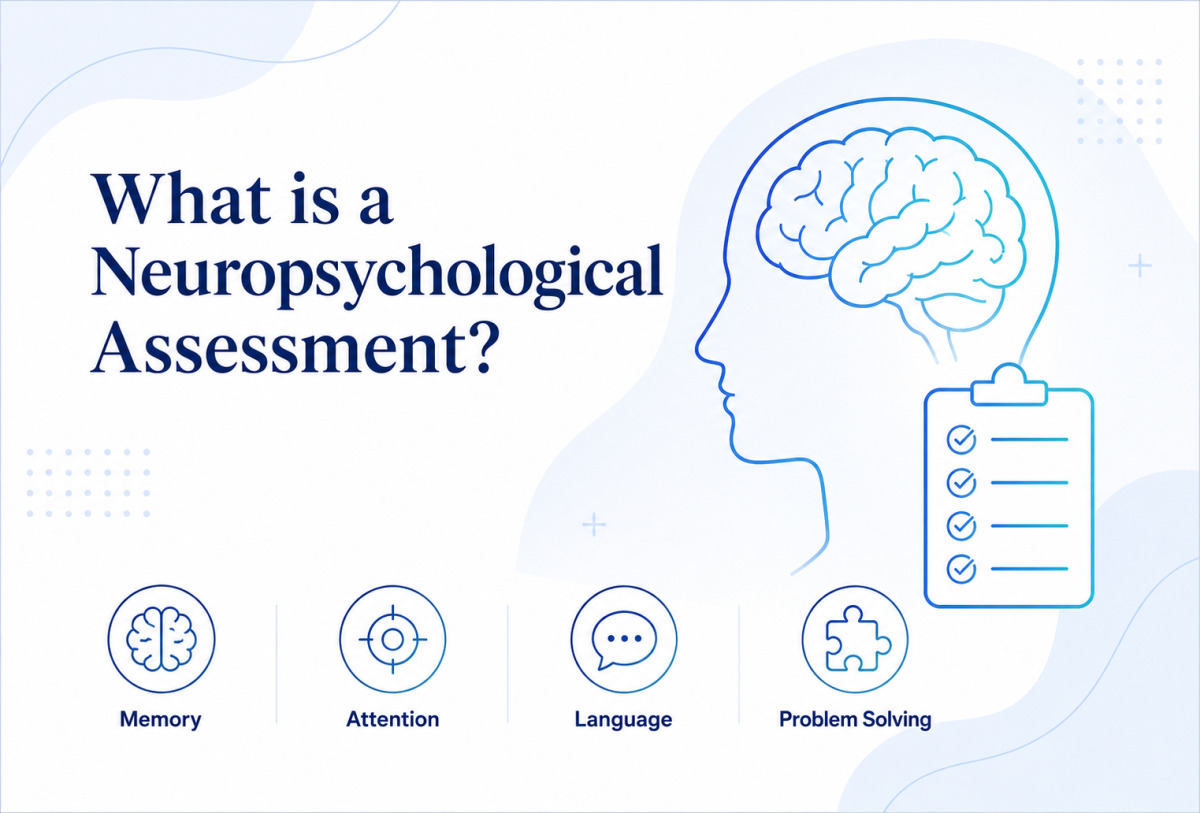
A neuropsychological assessment is a comprehensive diagnostic evaluation of how a person's brain functions in relation to their thinking, behaviour, and emotions. Conducted by a specialised clinical neuropsychologist, it uses standardised "pen and paper" or computerised tests to measure cognitive strengths and weaknesses.
Unlike brain scans (such as MRIs or CT scans) which show the physical structure of the brain, a neuropsychological assessment measures how well the brain is actually working in daily life.
Core Areas Evaluated
The assessment evaluates a wide range of mental functions by comparing your results against a healthy demographic database:
Memory and Learning: Assessing short-term, long-term, verbal, and visual memory.
Executive Functioning: Measuring high-level skills like planning, organisation, multitasking, and problem-solving.
Attention and Concentration: Testing your ability to focus, switch tasks, and process information quickly.
Language Abilities: Evaluating reading, comprehension, verbal fluency, and speech.
Visuospatial Skills: Determining how well you perceive visual relationships and space.
Mood and Personality: Checking for psychological factors like depression, anxiety, or behavioural changes.
Why People Get One
Referrals for this type of assessment are generally made to help diagnose, manage, or plan treatments for various conditions. Common reasons include:
Neurological Conditions: Evaluating the impact of a stroke, epilepsy, tumors, or multiple sclerosis.
Brain Injuries: Measuring cognitive changes following a concussion or traumatic brain injury.
Dementia & Aging: Distinguishing between normal aging, mild cognitive impairment, or Alzheimer's disease.
Developmental Disorders: Identifying learning disabilities, ADHD, or autism spectrum conditions.
Psychiatric Issues: Understanding cognitive fog or deficits linked to severe depression, anxiety, or schizophrenia.
Who performs a Neuropsychological Assessment
A Neuropsychological assessment is performed by a Clinical Neuropsychologist. In New Zealand, all Clinical Psychologists are Psychologists, but not all Psychologists are Clinical Psychologists. The difference lies in their postgraduate training, qualifications, and scopes of practice defined by the NZ Psychologists Board. Clinical psychologists are the primary type of psychologist trained and authorised to diagnose a broad range of mental health conditions. However, ability to diagnose depends heavily on a psychologist's specific registered scope of practice. A Clinical Neuropsychologist requires at least a Master's degree in Psychology followed by an accredited Postgraduate Diploma in Clinical Psychology, which includes 1,500 hours of supervised clinical practice. Our practice lead Dr Elena Moran holds a Doctoral Degree from the University of Canterbury and is one of the leading clinical neuropsychologists in New Zealand.
No psychologist in New Zealand can prescribe medication, regardless of their ability to diagnose. If a diagnosis requires medical treatment or pharmaceutical intervention, you must see a psychiatrist (a medical doctor) or a GP.
What to Expect During the Process
The entire process is non-invasive but detailed, often taking anywhere from 2 or more hours across one or more appointments. It follows three main steps:
The Clinical Interview: Your Clinical Psychologist gathers a detailed personal history. We will ask about your symptoms, medical history, education, and lifestyle. It is often highly recommended to bring a close family member or friend to provide collateral perspective. Sometimes we will contact these people to gather further information to help us better understand you and to make a clearer diagnosis.
The Testing Session: You will perform interactive tasks. These are not pass/fail tests, but rather activities like answering verbal questions, solving puzzles, drawing, recalling word lists, or completing simple computerised tasks.
Feedback and Reporting: The Clinical Psychologist scores your tests, compares them to baseline averages, and writes a detailed clinical report. A follow-up meeting is then scheduled to explain the findings and outline personalised rehabilitation strategies or medical recommendations.
ACC Funding
When funded through the Accident Compensation Corporation (ACC), it serves a highly specialised, legal-medical purpose: it provides ACC with the definitive clinical data required to confirm injury coverage and plan tailored rehabilitation services.
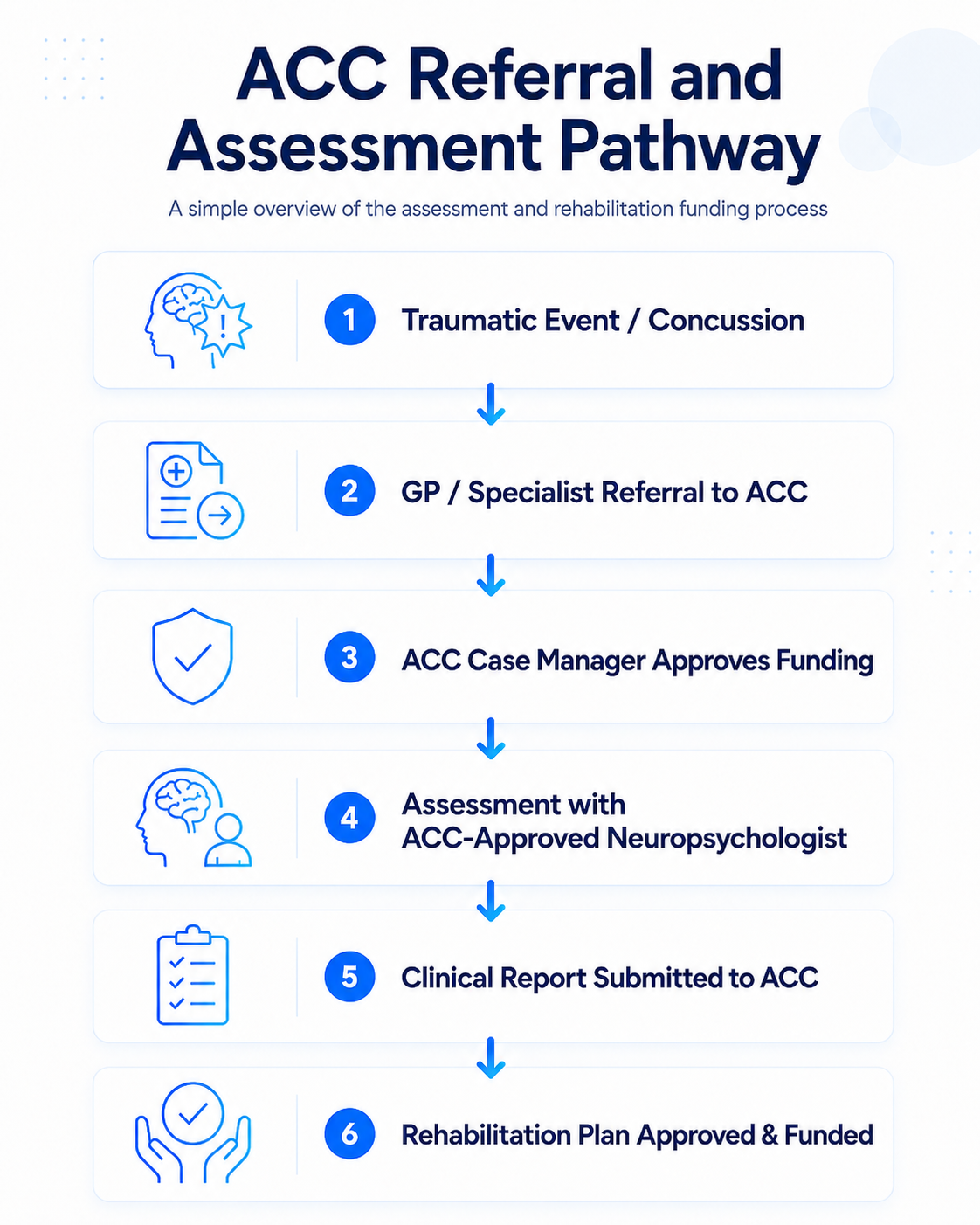
The ACC Referral and Assessment Process
The ACC Referral and Assessment process looks like this: